
The Middle Manager Problem Nobody Talks About
Ask most change practitioners where middle managers fit in a change effort, and you will get one of two answers. The first is that middle managers are a communication layer. They receive messages from above and pass them down to the people doing the work. They are, in this framing, a delivery mechanism: useful for […]
The Dashboard Is Green But Everything Is Wrong
Recovering Judgment: A Series on Practitioner Judgment in Change Management – Article 2 I was brought in after the second failure. A large global manufacturer had been implementing SAP HCM. By any formal measure, the project had been well-managed. Status reports were produced. Stakeholders had been engaged. Communications had gone out. Training had been planned. […]
Change Practitioners Don’t Lack Frameworks

Recovering Judgment: A Series on Practitioner Judgment in Change Management – Article 1 Change management doesn’t suffer from a shortage of frameworks. If anything, we may have the opposite problem. We have more models, methods, playbooks, templates, certifications, maturity assessments, toolkits, dashboards, and branded approaches than ever before. The field has been busy for decades […]
Change Moves Through Contact

I was tempted to describe change as similar to “Brownian motion” but, well, that just felt too clever, a little too precious. And, besides, the point I wanted to make is much simpler than that: Change moves through organizations by contact. People talk. They interpret. They misinterpret. They compare notes. They test the official story […]
Mastering Transformation by Fostering a Change-Ready Culture

Most organizations say they want a change-ready culture. Far fewer are willing to do the work required to create one. That’s because change readiness is often treated as an attitude problem. Employees need to be more adaptable. Leaders need to communicate more. Managers need to reinforce the message. Stakeholders need to get on board. Resistance […]
All the Liars in the Room
I’ve been thinking about the evolution of change management sentiment over the last few decades, and I keep coming back to the same conclusion: the field changes its language more readily than it changes its thinking. We like to tell a neat story about ourselves. We imagine that change management has progressed in some orderly […]
How Do We Show Up?

A recent post by Ron Leeman on LinkedIn asked, “Does Change Management have an identity crisis?” What this made me think about is how we show up as change practitioners. Not just what we call the discipline, but how we are experienced by others in the middle of uncertainty, ambiguity, and disruption. So maybe it’s […]
Change Fatigue? Really?!
It has been argued that organizational change fatigue has evolved from a temporary stress response into a chronic condition affecting workforce performance, innovation capacity, and strategic execution. The idea of change fatigue is not new; in fact, it has been around for decades. While the concept of change fatigue has been discussed extensively within the […]
Avoiding the Echo Chamber During Change
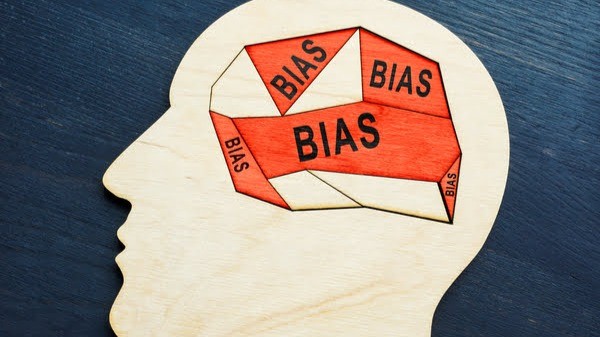
The echo chamber effect is a phenomenon where individuals are primarily exposed to information that validates their existing beliefs. This insulation is driven by digital algorithms and personal choices, leading to increased social polarization and a decline in shared factual reality. The echo chamber effect can significantly influence organizational change management by distorting decision-making processes, hindering the adoption of evidence-based strategies, and […]
The Problem with Change Leadership?

The problem with change leadership isn’t so much a problem as it is a misleading narrative; it’s how change practitioners of all brands and experience levels, and change scholars in particular, seem to characterize them in contrast to otherwise inept management – the essential villain cast as the reason why change efforts fail. We all […]
Change Readiness Revisited: The Nexus of Mind and Structure

Too often, “change readiness” gets treated as a quick pre-flight checklist: assess attitudes, confirm sponsorship, deliver communications, then launch. This article argues that readiness is better understood at the intersection of organizational psychology and management theory, where the “soft” realities of belief, emotion, and motivation meet the “hard” realities of structure, strategy, systems, and resources. […]
Why Classic Change Models Struggle with Modern Speed
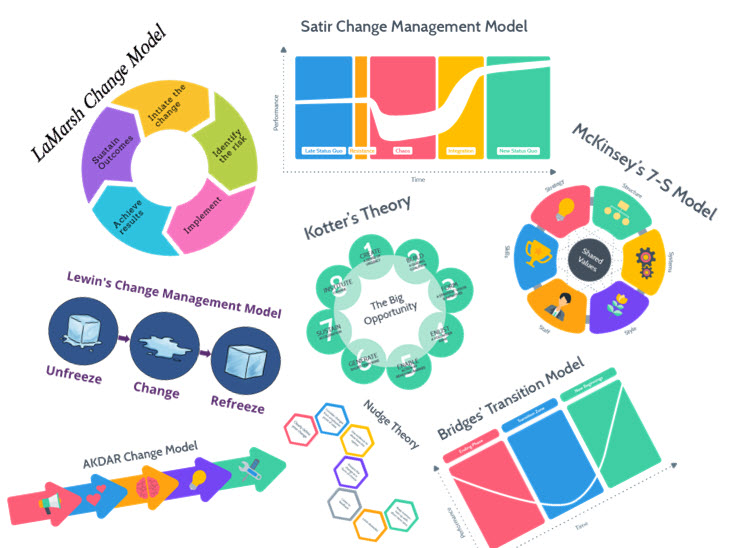
Established change management models still have real value. Their core ideas—creating a compelling vision, building dissatisfaction with the status quo, planning the work, empowering people, and consolidating gains—haven’t suddenly become irrelevant. What has changed is the context. Leaders today are dealing with unprecedented speed, simultaneity, and complexity. Multiple transformations run in parallel. Technologies, markets, and […]