
Exploring Change Capacity

Change capacity, broadly defined as an organization’s ability to effectively initiate, manage, and sustain change, is considered a critical element of long-term organizational success. It incorporates both the structural and cultural capabilities that enable an organization to navigate uncertainty and maintain operational continuity during disruptive transformations. Unlike the more reactive nature of change management, in […]
Is the Primacy of Individual Change Simply Folklore?

In “ADKAR: A Model for Change in Business, Government and our Community” (2006), Jeffrey Hiatt suggests that successful change is rooted in facilitating change 𝘸𝘪𝘵𝘩 𝘦𝘢𝘤𝘩 𝘪𝘯𝘥𝘪𝘷𝘪𝘥𝘶𝘢𝘭. According to Hiatt, the five elements of his model — 𝗮𝘄𝗮𝗿𝗲𝗻𝗲𝘀𝘀, 𝗱𝗲𝘀𝗶𝗿𝗲, 𝗸𝗻𝗼𝘄𝗹𝗲𝗱𝗴𝗲, 𝗮𝗯𝗶𝗹𝗶𝘁𝘆, and 𝗿𝗲𝗶𝗻𝗳𝗼𝗿𝗰𝗲𝗺𝗲𝗻𝘁 — are all necessary for an individual to realize change. When all […]
Change Sponsorship in Perspective

“𝙎𝙥𝙤𝙣𝙨𝙤𝙧𝙨𝙝𝙞𝙥 𝙞𝙨 𝙩𝙝𝙚 #1 𝙠𝙚𝙮 𝙘𝙤𝙣𝙩𝙧𝙞𝙗𝙪𝙩𝙤𝙧 𝙩𝙤 𝙘𝙝𝙖𝙣𝙜𝙚 𝙨𝙪𝙘𝙘𝙚𝙨𝙨.” This is apparently the consistent 𝗯𝗲𝗹𝗶𝗲𝗳 of a few hundred practitioners of varying levels of experience, most likely due to their own heavily inculcated confirmation bias. In other words, it is an interesting opinion but it has no probative value. One organization has offered a psychometrically […]
The Power of Intentional Influence

While it is generally acknowledged that stakeholder engagement differs from stakeholder management, some ambiguity remains in the literature, leading to the synonymous use of these terms. Unlike the reciprocal nature of stakeholder engagement, however, stakeholder management tends to be one-sided. When organizations engage in traditional stakeholder management, they primarily act to protect themselves from stakeholders’ […]
Readiness and Resistance: Coexisting Forces
While past organizational change management literature viewed resistance and readiness as opposite poles on a continuum, more recently this perspective has evolved. More contemporary research conceptualizes resistance and readiness as orthogonal concepts, meaning they can exist simultaneously and independently of each other. This shift acknowledges that individuals can experience both positive and negative emotions, beliefs, […]
Integrating Planned & Emergent Change

In much of the recent debate regarding planned and emergent change, it is presented as a dichotomy, an either/or proposition. What if there was room for both, together, in this debate? Planned and emergent change have been discussed in a previous post. Briefly, planned change focuses on improving the effectiveness of an organization’s human side […]
Reframing “Resistance to Change”

“Resistance to change is normal and expected.” “Actively manage resistance to minimize the impacts.” We’ve heard it for decades. So much so that these notions have been comfortably ingrained in our thought process regarding resistance, indoctrinated deep into our confirmation biases. But what if what we’ve been fed by the commercial purveyors of change management […]
A Case for Evidence-based Organizational Change

Many popular change models, like Kotter’s eight-stage process and Prosci’s ADKAR, lack robust empirical testing and validation. For example, Kotter’s eight-stage process, while widely praised and applied, has limited direct empirical support. Most of the evidence for this model comes from Kotter himself, and it is frequently used as a post-hoc framework to explain case […]
Evaluating Informal Networks: Part 2

Previously, we have only addressed engaging influencers assumed to be more positively disposed toward a change. In this segment, we will discuss potentially negative influencers and strategies for gaining their alignment. Negative influencers, such as gatekeepers, fence-sitters, and open challengers, can significantly impact change initiatives. While they present challenges, identifying and strategically engaging these individuals […]
Evaluating Informal Networks: Part 1

Leveraging informal influencers using ONA allows change agents to adopt a more responsive and resilient change strategy. Once identified, informal influencers can be enlisted as “change champions” or advocates who promote the change message in their respective networks. By involving them in the early stages of planning and decision-making, change agents can leverage their natural […]
Identifying the Informal Influencers in Organizations

In my last installment, I discussed research supporting the importance of leveraging informal influencers during change. Before we can engage and leverage informal influencers, we must first identify who and where they are. The traditional method is to ask managers to nominate these individuals, in much the same worn-out way we too typically use to […]
Unleashing Hidden Influence: Leveraging Informal Networks in Change
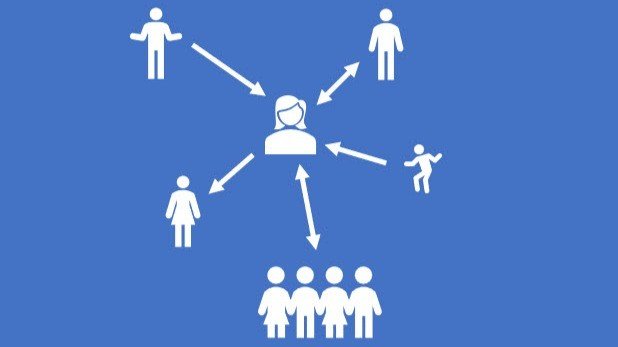
In recent studies on the ability of informal influencers to drive organizational change, evidence reinforces the critical role these informal networks play in the success of change initiatives. Research employing Organizational Network Analysis (ONA) has illustrated that informal influencers, although sometimes lacking formal authority, are often well-connected within an organization. This connectivity allows them to […]